







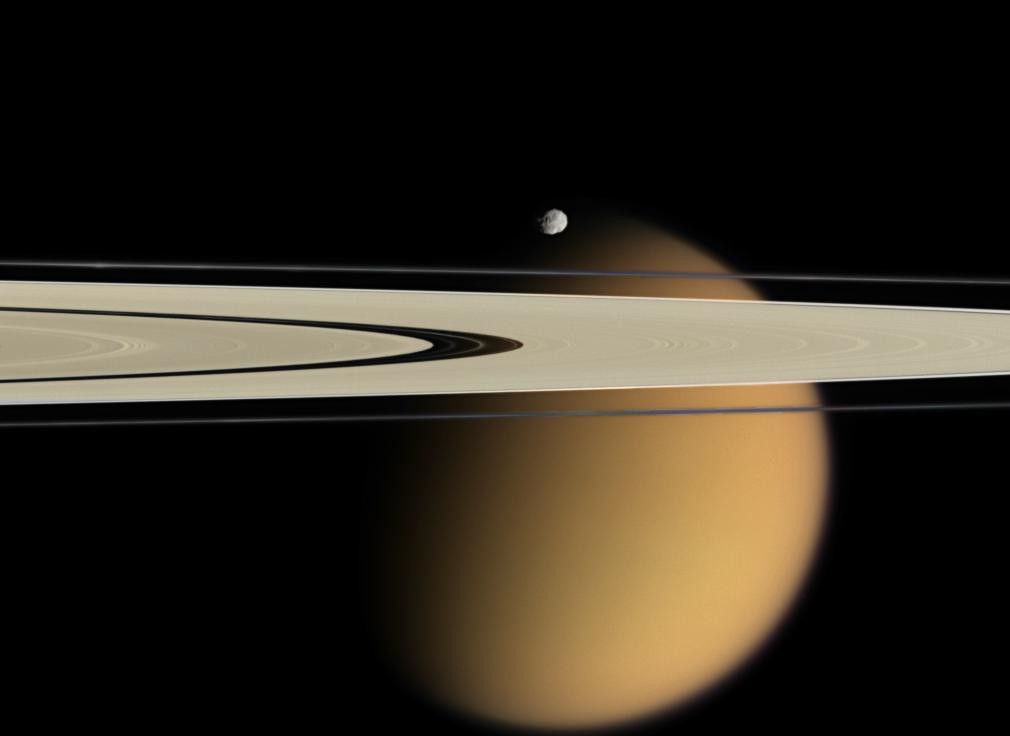
Life on Saturn’s moon Enceladus has intrigued scientists for years, prompting ongoing research into its icy surface and subsurface ocean. Recent studies suggest compelling evidence that could support the existence of microbial life.
Understanding Enceladus’ Unique Environment
Enceladus, one of Saturn’s most intriguing moons, has captivated scientists with its unique environment. Recent studies suggest that life on Saturn’s moon may be possible due to several key factors.
Firstly, Enceladus features a subsurface ocean beneath its icy crust, which may provide the necessary conditions for life to thrive. This ocean is believed to be in contact with the moon’s rocky core, potentially allowing for chemical reactions that could support microbial life.
Additionally, the presence of geysers that erupt plumes of water vapor and ice particles into space indicates active geological processes. These geysers are rich in organic molecules, which are essential building blocks for life.
Furthermore, the moon’s relatively moderate temperatures and the potential for hydrothermal vents on the seafloor further enhance its habitability.
As researchers continue to explore Enceladus, the prospect of discovering life on Saturn’s moon remains an exciting frontier in astrobiology.
Recent Discoveries on Enceladus
Recent discoveries on Enceladus have provided fascinating insights into the potential for life on Saturn’s moon. Scientists have been analyzing data collected by the Cassini spacecraft, which revealed the presence of water vapor and organic compounds in the moon’s plumes. These findings suggest that Enceladus has a subsurface ocean beneath its icy crust, creating an environment that could support microbial life.
In a recent study, researchers detected hydrothermal activity on the ocean floor, indicating a rich source of energy and nutrients that could sustain living organisms. The presence of essential chemical ingredients, such as carbon, hydrogen, nitrogen, oxygen, phosphorus, and sulfur, further enhances the prospects for life on Saturn’s moon.
Moreover, the discovery of complex organic molecules within the plumes raises questions about the potential for life beyond Earth. As scientists continue to investigate Enceladus, they hope to uncover more clues about its habitability and the possibility of discovering extraterrestrial life in our solar system.
Life on Saturn’s Moon: What We Know
Scientists have long been fascinated by the potential for life on Saturn’s moon, Enceladus, due to its unique characteristics and the discoveries made in recent years. Enceladus is known for its icy surface and the presence of a subsurface ocean, which raises intriguing questions about the possibility of life forms beneath the thick ice.
Recent studies have shown that the moon’s ocean is in contact with its rocky core, creating the right conditions for chemical reactions that could support microbial life. Notable findings include:
- Hydrothermal vents: The detection of plumes spewing water vapor and organic compounds suggests the presence of hydrothermal activity.
- Organic molecules: Instruments aboard the Cassini spacecraft identified complex organic molecules in the plumes, hinting at the building blocks of life.
- Temperature stability: The relatively stable temperature of the subsurface ocean may provide a suitable habitat for living organisms.
While definitive evidence of life on Saturn’s moon remains elusive, ongoing research continues to explore Enceladus as a prime candidate for astrobiological studies.
The Future of Exploration in the Outer Solar System
The future of exploration in the outer solar system holds exciting possibilities, especially regarding life on Saturn’s moon, Enceladus. As scientists continue to unravel the mysteries of this intriguing celestial body, upcoming missions aim to enhance our understanding of its potential for hosting life.
NASA’s planned missions, such as the Europa Clipper, will not only focus on Jupiter’s moon but also pave the way for further exploration of Enceladus. These missions will utilize advanced instruments to analyze the moon’s icy plumes, which are believed to contain organic materials and possibly signs of microbial life.
Moreover, the James Webb Space Telescope is expected to offer unprecedented insights into the composition of Enceladus’ surface and subsurface ocean. As technology advances, the possibility of sending a lander or orbiter to Enceladus becomes more feasible, bringing us closer to answering the question of life on Saturn’s moon.
Ultimately, these efforts will not only deepen our knowledge of Enceladus but also expand our understanding of life’s potential beyond Earth.
By NASA Goddard Photo and Video via Openverse