







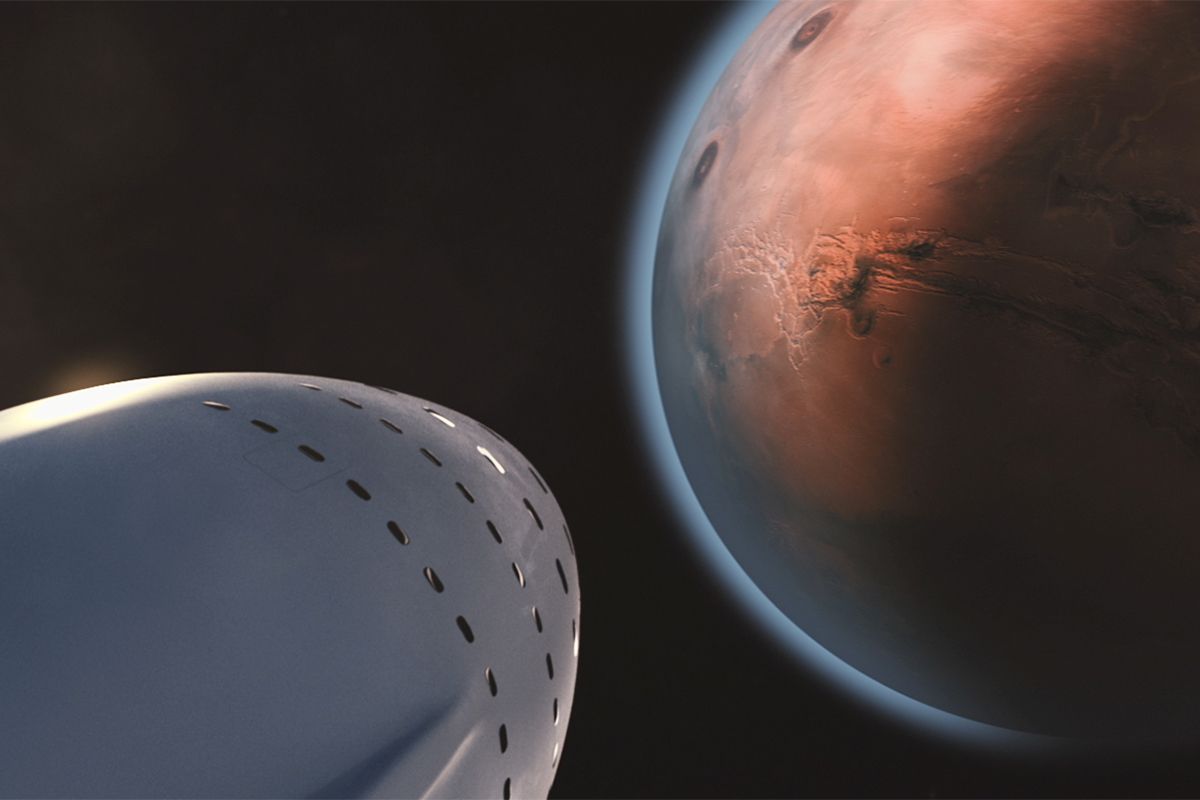
Escapade Spacecraft Mars has officially left its loiter orbits and is en route to the Red Planet. This significant move marks a new chapter in space exploration.
Overview of the Escapade Spacecraft
The Escapade Spacecraft is set to embark on an ambitious mission to explore Mars, marking a significant milestone in space exploration. This innovative spacecraft is designed to gather vital data about the Martian atmosphere and its potential for supporting future missions.
Equipped with advanced technology, the Escapade Spacecraft aims to provide insights into the planet’s climate and weather patterns. The mission will focus on understanding the dynamics of Mars’ atmosphere, which is crucial for determining its habitability and future colonization efforts.
One of the primary objectives of the Escapade Spacecraft is to:
- Investigate the structure and composition of the Martian atmosphere.
- Measure atmospheric escape processes that could affect Mars’ ability to retain water.
- Analyze weather patterns to enhance our understanding of Martian seasons.
The journey of the Escapade Spacecraft represents a smart move to new frontiers, as it not only enhances our knowledge of Mars but also paves the way for subsequent exploration missions. As the spacecraft leaves its loiter orbit, excitement builds around the potential discoveries that await on the red planet.
Importance of Mars Exploration
The exploration of Mars holds significant importance for humanity, serving as a gateway to understanding our solar system and the potential for life beyond Earth. The recent launch of the Escapade Spacecraft Mars marks a pivotal moment in this ongoing quest for knowledge.
First and foremost, Mars exploration aids in the search for extraterrestrial life. By studying the planet’s surface and atmosphere, scientists can gather clues about its history and whether it ever harbored life. This pursuit of discovering life forms beyond our planet is not only a scientific endeavor but also a philosophical one, reshaping our understanding of our place in the universe.
Moreover, Mars serves as a testing ground for future human missions. The findings from the Escapade Spacecraft Mars can help develop technologies and strategies necessary for sustaining human life on other planets. This research is crucial as we look towards potential colonization and long-term habitation in space.
In addition, Mars exploration contributes to advancements in technology that can benefit life on Earth. Innovations developed for space missions often find applications in various industries, enhancing our daily lives. Thus, the importance of Mars exploration extends far beyond the red planet itself, paving the way for new frontiers in science and technology.
Technical Specifications of Escapade
The Escapade spacecraft, designed for a groundbreaking mission to Mars, boasts an array of advanced technical specifications that set it apart from previous missions. With a focus on efficiency and adaptability, Escapade is equipped with cutting-edge technology aimed at enhancing our understanding of the Martian atmosphere and its potential for habitability.
Key technical specifications of the Escapade spacecraft include:
- Propulsion System: Utilizing a highly efficient ion propulsion system, Escapade can maneuver with precision, allowing for extended mission durations and extensive exploration of Martian environments.
- Communication Technology: Equipped with advanced communication instruments, the spacecraft can transmit data back to Earth at unprecedented speeds, ensuring that scientists receive timely information regarding Mars’ atmospheric conditions.
- Sensors and Instruments: The spacecraft features state-of-the-art sensors designed to analyze Martian weather patterns, surface composition, and potential signs of past life, providing valuable insights into the planet’s history.
- Power Supply: A robust solar panel array powers the spacecraft, ensuring that it can sustain itself during the lengthy journey to Mars and throughout its mission operations.
Overall, the technical specifications of the Escapade spacecraft represent a smart move towards new frontiers in Mars exploration, laying the groundwork for future scientific discoveries.
Launch Timeline and Milestones
The launch timeline for the Escapade Spacecraft Mars mission is a pivotal aspect of its journey towards unlocking the mysteries of the Red Planet. Scheduled for takeoff in early 2024, the spacecraft is set to embark on a meticulously planned trajectory that spans several key milestones.
Following its launch, the Escapade Spacecraft will spend approximately six months in transit to Mars. During this phase, engineers will conduct a series of system checks to ensure optimal performance upon arrival. Key milestones during this period include:
- Launch Window Opening: The spacecraft will lift off from Earth during a favorable launch window to maximize fuel efficiency.
- Mid-Course Corrections: Several trajectory adjustment maneuvers will be executed to refine its path to Mars.
- Arrival at Mars Orbit: The spacecraft is expected to enter Mars’ orbit in late 2024, where it will begin its primary scientific mission.
Throughout its journey, the mission team will closely monitor the spacecraft’s systems and performance, ensuring that it remains on track. The successful execution of these milestones will mark a significant step forward in Mars exploration, paving the way for groundbreaking discoveries.
Challenges in Space Travel
Space travel, particularly missions to Mars, is fraught with challenges that can impact the success of spacecraft like the Escapade Spacecraft Mars. As engineers and scientists push the boundaries of exploration, they must navigate a series of hurdles that test both technology and human ingenuity.
One of the primary challenges is the harsh environment of space. This includes extreme temperatures, radiation exposure, and micrometeorite impacts that can jeopardize spacecraft integrity. To counteract these threats, the Escapade team has employed advanced materials and technologies designed to withstand the rigors of interplanetary travel.
Another significant challenge is the vast distance involved. Communication delays and the need for autonomous operations are critical considerations for the Escapade Spacecraft Mars mission. Engineers must ensure that the spacecraft can perform essential functions without real-time input from mission control, a task that requires sophisticated algorithms and reliable systems.
Finally, resource management is a key factor in the success of any space mission. Supplies must be carefully calculated and managed to ensure that the spacecraft can sustain its journey and fulfill its scientific objectives upon reaching Mars. Addressing these challenges is vital for the Escapade Spacecraft to achieve its mission goals and contribute valuable data to our understanding of the Red Planet.
Future Missions Beyond Mars
The successful deployment of the Escapade Spacecraft Mars marks a significant milestone in interplanetary exploration. As space agencies look beyond the Red Planet, future missions aim to expand our understanding of the solar system.
One of the key objectives is to investigate the potential for life on moons such as Europa and Enceladus, which are believed to harbor subsurface oceans. These missions could reveal vital information regarding the conditions necessary for life, thereby reshaping our comprehension of habitability in the cosmos.
Furthermore, missions targeting asteroids are being planned to gather resources and study their composition. Such expeditions could not only enhance our knowledge of the early solar system but also pave the way for mining endeavors, which may support future human colonization efforts.
In addition to these exploratory goals, the development of advanced propulsion systems is a priority. These technologies are essential for improving travel times and ensuring the safety of astronauts on long-duration missions. The Escapade Spacecraft Mars, with its innovative design, serves as a precursor to these future initiatives.
- Investigating moons like Europa and Enceladus
- Targeting asteroids for resources
- Developing advanced propulsion systems
As we venture into new frontiers, collaboration between international space agencies will be crucial for sharing knowledge and resources.
Public Interest in Space Exploration
The public’s fascination with space exploration has reached new heights as missions like the Escapade Spacecraft Mars capture the imagination of people worldwide. This interest is fueled by a combination of scientific curiosity, technological advancements, and the allure of the unknown.
Many factors contribute to this growing enthusiasm:
- Educational Outreach: Organizations involved in space exploration are increasingly focusing on education, providing resources and programs that engage students and the public.
- Media Coverage: The extensive coverage of missions by news outlets and social media platforms allows individuals to stay informed and connected to the latest developments in space science.
- Public Engagement: Initiatives such as live broadcasts of rocket launches and interactive online content help demystify space missions, making them accessible to a broader audience.
- Inspiring Innovations: The advancements in technology and engineering associated with projects like the Escapade Spacecraft Mars inspire a sense of wonder and possibility.
As humanity stands on the brink of potentially discovering new life or resources on Mars, public interest will likely continue to grow, encouraging more investment and participation in space exploration initiatives.
Conclusion and Implications for Science
The journey of the Escapade spacecraft Mars represents not just a technological achievement but also a pivotal moment in our understanding of the universe. As this innovative mission progresses, it opens the door to numerous implications for science and exploration.
Firstly, the data collected by the Escapade spacecraft will enhance our knowledge of Mars’ atmosphere and geology. This information is crucial for understanding the planet’s past, its potential for hosting life, and its habitability for future human missions. Additionally, the insights gained could inform the ongoing search for extraterrestrial life beyond our solar system.
Moreover, the success of the Escapade mission could serve as a blueprint for future interplanetary missions. As scientists and engineers refine the technologies used in this mission, they will lay the groundwork for more ambitious projects, such as human colonization of Mars or exploration of the outer planets.
Public interest in space exploration is at an all-time high, and missions like Escapade can inspire future generations to pursue careers in science, technology, engineering, and mathematics (STEM). The excitement surrounding such missions fosters a sense of global unity and curiosity about our place in the cosmos. In conclusion, the Escapade spacecraft Mars is not just a mission—it is a step into a broader understanding of the universe and our role within it.
The Escapade Spacecraft Mars is poised to revolutionize our understanding of the Martian atmosphere. With its innovative technology, the Escapade Spacecraft Mars aims to gather crucial data that could pave the way for future exploration missions.
Photo by SpaceX on Pexels