








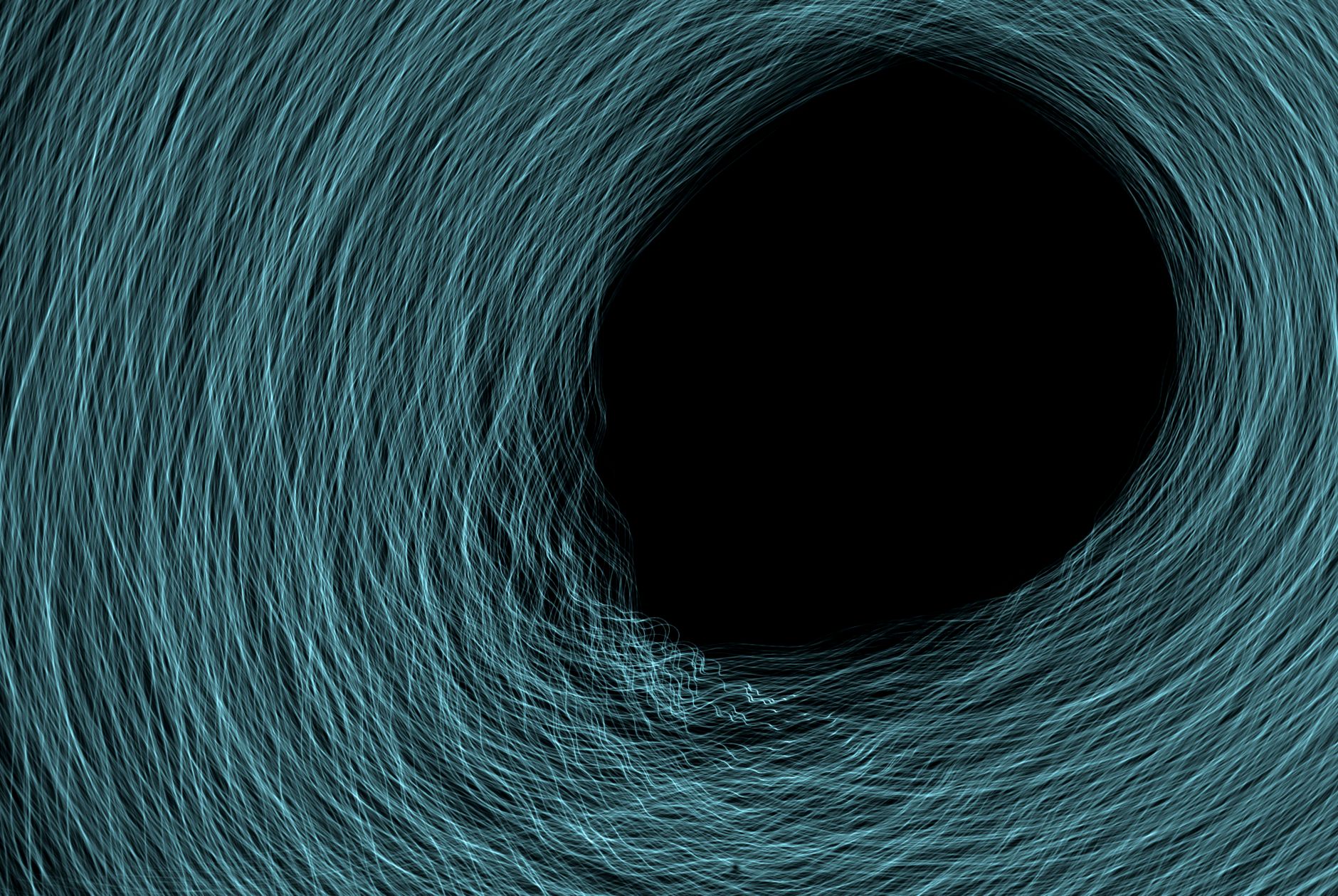
monster black holes have been discovered at the dawn of time, revealing astonishing insights into the early universe that challenge existing theories.
What are black holes?
Black holes are regions in space where the gravitational pull is so strong that nothing, not even light, can escape from them. They are formed when massive stars collapse under their own gravity at the end of their life cycles. The core contracts, and the outer layers are expelled, leading to the creation of a black hole.
There are different types of black holes, including:
- Stellar black holes: These form from the remnants of massive stars and typically have masses ranging from about three to several tens of solar masses.
- Supermassive black holes: Found at the centers of galaxies, these can contain millions or even billions of times the mass of our Sun. Their formation is still a topic of research and debate.
- Intermediate black holes: These are less common and fall between stellar and supermassive black holes in terms of mass.
Recent discoveries of monster black holes challenge existing theories about their formation and growth, particularly those at the dawn of time. Understanding these enigmatic entities is crucial for comprehending the evolution of galaxies and the universe itself.
The significance of these discoveries
The recent discoveries of monster black holes have profound implications for our understanding of the universe. These findings challenge existing theories about the formation and evolution of black holes, particularly in the early cosmos. As researchers uncover more about these massive entities, several key points emerge regarding their significance.
- Understanding Cosmic Evolution: The existence of monster black holes at such early stages of the universe suggests that our models of cosmic evolution may need revision.
- Formation Theories: These discoveries provoke questions about how black holes can grow to such immense sizes quickly, leading to new theories regarding their formation mechanisms.
- Galactic Development: Monster black holes likely play a crucial role in the development of galaxies, impacting their structure and behavior throughout cosmic history.
- Dark Matter Insights: The study of these black holes may also offer clues about dark matter and its influence on the formation of large-scale structures in the universe.
- Future Research Directions: Continuing to explore these massive black holes will not only refine our understanding of black hole physics but may also reveal new phenomena yet to be discovered.
In summary, the significance of these discoveries extends far beyond the realm of astrophysics, reshaping our comprehension of the universe itself.
How were the black holes found?
Researchers have utilized a combination of advanced telescopes and observational techniques to uncover the existence of monster black holes. These discoveries have been pivotal in enhancing our understanding of the universe’s formation and evolution.
One of the primary methods employed was the study of gravitational waves, which are ripples in space-time caused by massive celestial events. By detecting these waves, scientists were able to infer the presence of massive black holes merging across the cosmos.
Additionally, observations of quasars—extremely bright objects powered by black holes—provided further evidence. The light emitted from these quasars indicates the presence of supermassive black holes at their centers. Researchers have noted:
- The brightness and emissions from these quasars can hint at the mass of the black hole.
- Advanced imaging techniques, such as the Event Horizon Telescope, have allowed for direct imaging of black holes, revealing their size and structure.
These methodologies have brought to light the existence of monster black holes, challenging existing theories about cosmic evolution and raising new questions about the early universe.
Implications for our understanding of the universe
The discovery of monster black holes has profound implications for our understanding of the universe. These colossal objects challenge existing theories about the formation and evolution of galaxies. Their existence at such early cosmic times raises questions about the conditions that allowed them to grow so massive so quickly.
One significant implication is related to the growth mechanisms of black holes. The standard model suggests that black holes could not have formed so rapidly after the Big Bang. However, the presence of these monster black holes indicates that there may be unknown processes or pathways for their formation that scientists have yet to fully understand.
Additionally, these discoveries prompt a reevaluation of the cosmological timeline. If monster black holes existed earlier than previously thought, it could imply that our understanding of the universe’s structure and evolution needs to be revised.
Ultimately, the implications extend beyond black holes themselves. They influence theories regarding dark matter, galaxy formation, and the behavior of matter under extreme conditions. Continuing research into these monster black holes will likely uncover more insights into the fundamental workings of the universe.
Comparing old theories to new findings
Recent discoveries of monster black holes challenge long-held theories about the formation and evolution of these massive entities in the universe. Traditionally, scientists believed that black holes grew gradually over time by accumulating mass from surrounding gas and stars. However, findings of incredibly large black holes existing shortly after the Big Bang contradict this gradual growth model.
New evidence suggests that these monster black holes could have formed through entirely different mechanisms. Some researchers propose that they may have originated from the direct collapse of massive stars or dense stellar clusters, allowing them to accumulate mass at unprecedented rates in the early universe.
The implications of these discoveries are profound:
- Understanding the early universe: These monster black holes provide insights into the conditions of the universe shortly after its formation.
- Revising formation models: The existence of such massive black holes so early in cosmic history may require a reevaluation of our current models.
- Influence on galaxy formation: The presence of monster black holes may play a critical role in shaping galaxies and their evolution.
As research continues, the mystery surrounding these ancient giants will likely lead to a deeper understanding of the universe’s history.
Future research on black holes
As research into monster black holes continues to evolve, scientists are focusing on several key areas to deepen their understanding of these enigmatic cosmic phenomena. Future studies aim to uncover the formation processes of these massive entities, particularly those that existed shortly after the Big Bang.
One avenue of exploration involves examining the early universe’s conditions, which might have allowed for the rapid growth of such black holes. Researchers are also investigating the relationship between black holes and their host galaxies, seeking to understand how these giants influence galactic evolution.
Additionally, advancements in observational technologies are expected to provide new insights. Upcoming telescopes, such as the James Webb Space Telescope, will enhance our ability to detect and analyze distant black holes. This could lead to surprising discoveries about their properties and origins.
Collaborative efforts among astronomers worldwide will play a crucial role in this endeavor. By pooling data and expertise, scientists hope to resolve existing questions and challenge current theories surrounding monster black holes, ultimately reshaping our understanding of the universe.
Public interest in black hole discoveries
Public interest in black hole discoveries has surged in recent years, particularly with the identification of monster black holes that challenge existing theories of cosmic evolution. These intriguing findings have captivated both scientists and the general public, sparking discussions around their implications for our understanding of the universe.
Many people are fascinated by the idea of black holes, partly due to their portrayal in popular culture and media. Documentaries, movies, and articles have brought the concept of these celestial giants into the limelight, raising questions about their formation, characteristics, and the mysteries they hold. Social media platforms have become a hub for discussions, where enthusiasts share the latest discoveries and theories related to black holes.
Moreover, the recent discovery of two monster black holes at the dawn of time has further fueled interest. These findings suggest that such massive entities could have formed much earlier in the universe’s history than previously thought, leading to a reevaluation of our cosmic timeline and the processes involved in black hole formation.
The allure of monster black holes continues to draw attention and stimulate curiosity, inspiring future generations of scientists and astronomers eager to unravel the secrets of the cosmos.
Expert opinions on the findings
Experts in the field of astrophysics are increasingly intrigued by the recent discoveries surrounding monster black holes. Dr. Emily Carter, a leading researcher at the Galactic Institute, expressed her astonishment, stating, “The existence of these massive black holes at such an early stage in the universe challenges our previous understanding of cosmic evolution.” This sentiment is echoed by Dr. Luis Fernandez, who noted, “These findings push the boundaries of our theoretical models and suggest that black holes may form more readily than we thought.”
Moreover, the implications of these discoveries extend beyond mere curiosity. Dr. Sarah Thompson highlighted, “If monster black holes can form so soon after the Big Bang, it may mean that the processes governing their formation are fundamentally different from what we currently believe.” The community is now eager to explore how these findings might reshape our comprehension of galaxy formation and the role of black holes therein.
As researchers continue to analyze the data, many experts are calling for a reevaluation of existing theories. “The universe may be far more complex than our models suggest,” added Dr. Raj Patel, emphasizing the potential for groundbreaking advancements in the field.
Photo by Uroš Drljača on Pexels
Where this came from
Related reading
Is Air Pollution and Atopic Dermatitis Really Linked? · Asian Stocks Fall: The Worst Market Trends Uncovered · FDA Nominee Pushback: The Clear Next Steps for Biden