
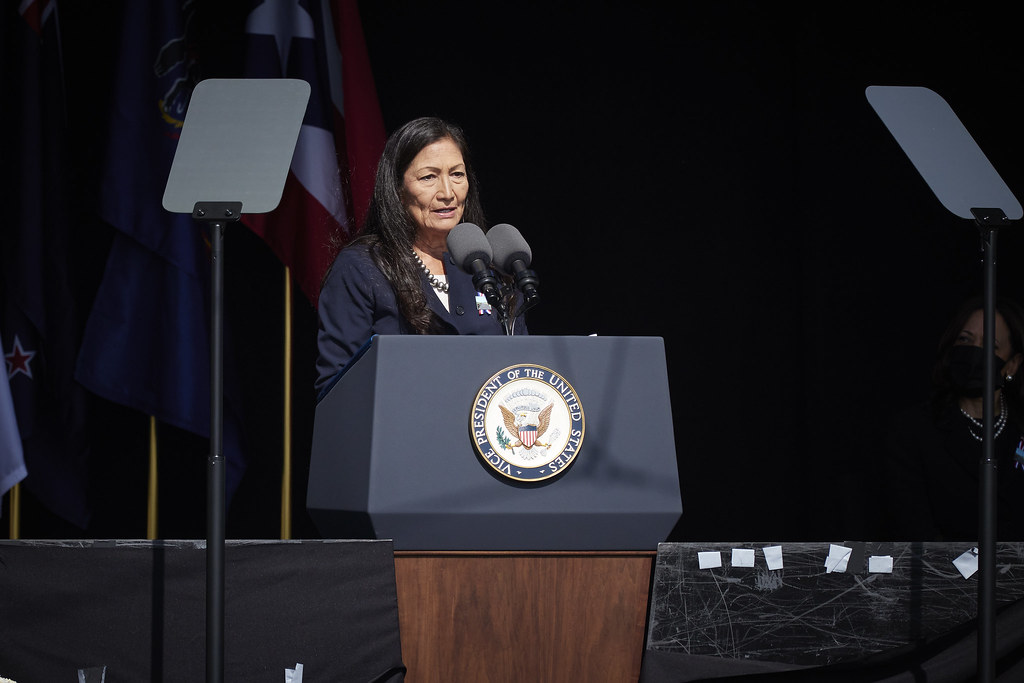
Deb Haaland governor aspirations mark a significant milestone in American politics. As the first female Native American candidate for governor, her potential election could reshape leadership in the state.
Who is Deb Haaland?
Deb Haaland, a prominent political figure and advocate, has made history as a member of the U.S. House of Representatives, where she represents New Mexico’s 1st congressional district. Born in 1960 in Winslow, Arizona, Haaland is a member of the Pueblo of Laguna tribe and has dedicated her career to serving Indigenous communities and addressing issues related to social justice, environmental protection, and economic development.
Before her election to Congress in 2018, she was the chair of the New Mexico Democratic Party and served as the state’s first Native American woman to be elected as Lieutenant Governor. Her commitment to public service is deeply rooted in her personal experiences and the values instilled in her by her family, particularly her mother and grandmother.
As the political landscape shifts in New Mexico, many are contemplating whether Deb Haaland could be the right choice for governor. Her supporters highlight her record of advocacy and the strength she brings as a matriarchal figure in Indigenous leadership. In a state rich with cultural diversity, Haaland’s potential gubernatorial candidacy symbolizes hope for many New Mexicans seeking authentic representation.
The Significance of Her Candidacy
Deb Haaland’s candidacy for governor carries significant weight not only for New Mexico but also for the broader representation of Native Americans in politics. If elected, she would make history as the first female Native American governor in the United States, a milestone that resonates deeply within Indigenous communities and beyond.
The implications of her leadership could be transformative. As a member of the Pueblo of Laguna, Haaland’s background brings a unique perspective to issues affecting tribal nations and underrepresented groups. Her experience as a congresswoman has showcased her commitment to environmental justice, economic development, and healthcare access, all critical issues for New Mexicans.
Moreover, Haaland’s candidacy symbolizes a shift toward greater inclusivity and diversity in governance. It challenges the traditional power dynamics and inspires a new generation of leaders from marginalized communities. Supporters argue that her leadership style, rooted in the values of community and collective responsibility, aligns perfectly with the needs of New Mexico’s diverse population.
In light of these factors, the question remains: Is Deb Haaland governor the right choice for New Mexico? The answer may well shape the state’s future trajectory.
Challenges Facing Deb Haaland
As Deb Haaland campaigns for governor, she faces a myriad of challenges that could impact her chances for success. One of the most pressing issues is the economic landscape of New Mexico, which has been affected by fluctuating oil and gas prices. Job creation and diversification of the economy are essential for attracting new businesses and retaining residents.
Additionally, the state grapples with significant societal issues, including education and healthcare disparities. Many communities, particularly in rural areas, lack access to quality services, and addressing these inequalities will be crucial for Haaland’s administration if she becomes the governor.
Another challenge is the political landscape. New Mexico has a history of political polarization, and Haaland will need to appeal to a broad range of voters, including independents and moderate Republicans. Her track record as a U.S. Representative emphasizes progressive values, which may not resonate with all constituents.
Finally, as the first female Native American governor, Haaland carries the weight of expectations from various communities. Her leadership style and decision-making will be closely scrutinized as she navigates these challenges and works to unify the state under her vision for a prosperous New Mexico.
Public Support for Haaland
Public support for Deb Haaland as governor is growing, fueled by her commitment to advancing progressive policies that resonate with many New Mexicans. Her background as a Native American leader and her tenure in Congress have garnered praise from various communities across the state.
Recent polls indicate that a significant portion of the electorate views Haaland as a transformative figure. Supporters cite her ability to connect with a diverse range of constituents as a key factor in her favor. Many believe that her leadership would bring much-needed change to New Mexico, especially in areas such as:
- Environmental Policy: Haaland’s focus on sustainable practices aligns with the values of many voters concerned about climate change.
- Social Justice: Her advocacy for marginalized communities has resonated deeply, particularly among younger voters.
- Economic Development: Her plans to boost local economies through innovative initiatives appeal to a broad audience.
As the campaign progresses, Deb Haaland governor remains a rallying cry for those who believe in her vision for a more inclusive and equitable New Mexico.
Impact on Native American Communities
The potential election of Deb Haaland as governor could have profound implications for Native American communities in New Mexico. As a member of the Pueblo of Laguna and the first Native American woman to serve in Congress, Haaland has a unique understanding of the issues facing Indigenous populations.
Her administration may prioritize the following areas:
- Tribal Sovereignty: Advocating for the rights and sovereignty of Native tribes, ensuring their voices are heard in state policies.
- Economic Development: Promoting initiatives that bolster tribal economies, including support for sustainable businesses and job creation.
- Environmental Protection: Addressing climate change impacts on tribal lands, particularly protecting sacred sites and natural resources.
- Education: Enhancing educational opportunities for Native youth, including culturally relevant curricula and funding for schools on reservations.
Deb Haaland’s governor candidacy is seen as a pivotal moment for New Mexico, particularly for its Indigenous communities. Many believe her leadership could lead to stronger partnerships between the state and tribal nations, fostering a more inclusive approach to governance. Her vision resonates not only with Native Americans but also with those advocating for social justice and equity.
Comparing Haaland to Other Candidates
As New Mexico approaches the upcoming gubernatorial election, the spotlight is on Deb Haaland governor and how she measures up against her competitors. Her unique background as a Native American woman has set her apart in a field that includes seasoned politicians and business leaders.
Among her main opponents are:
- Mark Ronchetti – A former television weatherman and Republican candidate, Ronchetti has positioned himself as a conservative alternative focused on economic growth.
- Michelle Lujan Grisham – The current governor, Grisham, has a record of progressive policies but has faced criticism on issues such as crime and the economy.
- Eduardo M. Martinez – A lesser-known candidate, Martinez is advocating for grassroots reforms and aims to attract younger voters.
Deb Haaland’s ability to connect with diverse communities and advocate for environmental justice will be crucial in distinguishing her candidacy. Her supporters argue that her leadership is essential for addressing the unique challenges New Mexico faces, particularly in education and healthcare reform.
What’s Next for New Mexico Politics?
As New Mexico approaches the upcoming gubernatorial election, the political landscape is shifting dramatically. Deb Haaland, a prominent figure in state politics, is positioning herself as a contender who could redefine leadership in the region. Her candidacy as governor has ignited discussions on various critical issues, including economic development, education, and environmental sustainability.
The potential for Haaland to become the first female Native American governor has galvanized a diverse coalition of supporters who see her as a visionary leader. However, the challenges ahead remain significant. As the election date draws near, candidates will need to articulate clear policies that resonate with the electorate’s needs.
Voter turnout will be crucial, and Haaland’s campaign is focusing on mobilizing young voters and marginalized communities. Additionally, debates and public forums will provide platforms for candidates to address pressing concerns such as healthcare and job creation.
As the political climate continues to evolve, many are left wondering if Deb Haaland is indeed the right choice for New Mexico. Her ability to unite various factions and present a coherent vision for the future will be key to her success.
Supporters argue that Deb Haaland governor would bring much-needed change to the state’s environmental policies. However, critics question whether her experience is sufficient to tackle New Mexico’s complex economic issues.
By governortomwolf via Openverse
References
October dividend champions: Best proven payouts for investors · DoorDash Instacart Acquisition: A Smart Move for Growth · Malaria vaccine price: Is it the best deal now?